
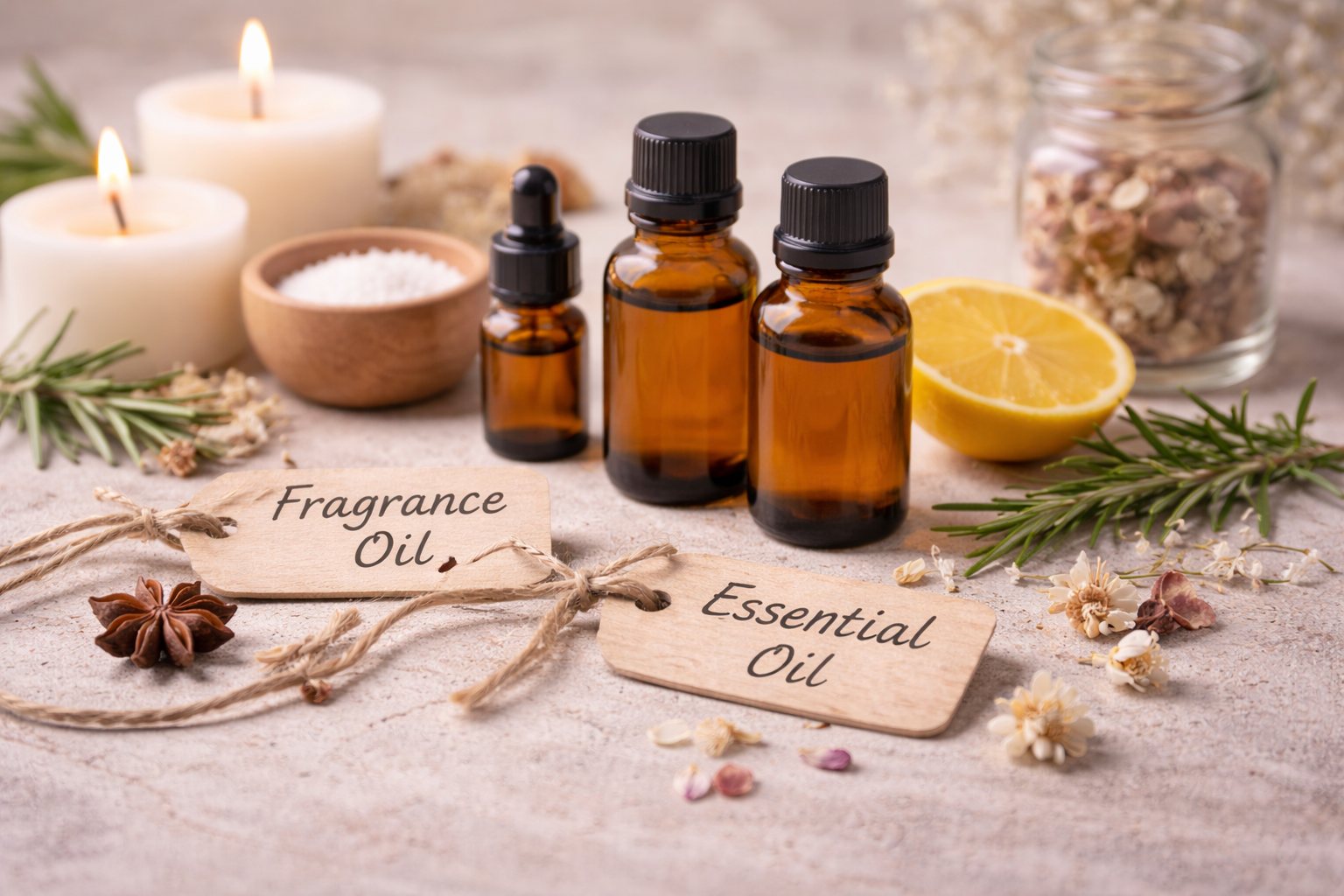
Which one should you use in your candle?
One of the most common questions in candle making workshops is: “Should I use fragrance oils or essential oils?”
Both options can scent a candle, but they behave very differently. Understanding the differences will help you create candles that smell stronger, burn better, and impress anyone who enjoys them.
What is Fragrance Oil?
Fragrance oils are specially formulated scents designed for products like candles, soaps, and cosmetics. They may include natural ingredients, synthetic compounds, or a combination of both.
Why we use fragrance oils in our workshop
In our candle-making workshops, we exclusively use fragrance oils because they are perfect for beginners and home candle makers. Here’s why:
1. Strong Scent Throw
Fragrance oils are designed to release their scent effectively while the candle is burning, creating a pleasant aroma in your room.
2. Wide Variety of Scents
You can choose from hundreds of fragrances like:
- Vanilla
- Ocean Breeze
- Pumpkin Spice
- Fresh Linen
- Coffee
- Floral blends
3. Stable in Wax
Fragrance oils are formulated to mix well with wax and retain their scent during heating and pouring.
4. Affordable and Beginner-Friendly
Compared to essential oils, fragrance oils are more budget-friendly and easier to work with, making them ideal for workshops.
What is Essential Oil?
Essential oils are 100% natural oils extracted from plants, flowers, leaves, bark, or roots through steam distillation or cold pressing.
While they are natural and used in aromatherapy, they have some challenges when used in candles:
- Weaker Scent Throw – Essential oils often produce a lighter fragrance that may not fill a room.
- Heat Sensitivity – Some essential oils lose their scent when exposed to heat during candle making.
- Higher Cost – Producing essential oils requires large amounts of plant material, making them more expensive.
Limited Variety – Essential oils only come in natural plant scents and cannot replicate popular candle fragrances like vanilla, chocolate, or fresh laundry
Fragrance Oil vs Essential Oil Comparison
| Feature | Fragrance Oil | Essential Oil |
| Source | Natural + Synthetic blend | 100% plant-based |
| Scent Strength | Strong | Mild to moderate |
| Heat Stability | Very stable | Can degrade with heat |
| Variety | Hundreds of scents | Limited natural scents |
| Price | Affordable | Expensive |
| Best For | Candle making | Aromatherapy & skincare |
Final Thoughts
If you want beautiful, fragrant candles that fill a room, fragrance oils are the way to go. Essential oils are natural but better suited for aromatherapy products rather than candles.
Using fragrance oils allows you to enjoy a strong scent throw, a variety of exciting fragrances, and consistent results—perfect for beginners and hobbyists alike.
✨ Join our Candle Making Workshop to learn how to create your first scented candles with fragrance oils. You’ll leave with your own hand-poured candle and the skills to make more at home!
Fragrance Oil Guide: Best scents for beginners
Here’s a simple guide to help you choose fragrance oils for your candles based on mood, season, and type of candle:
| Mood/Theme | Recommended Fragrance Oils | Notes |
| Relaxing & Calming | Lavender, Chamomile, Vanilla, Sandalwood | Perfect for bedrooms or spa-like vibes |
| Fresh & Clean | Fresh Linen, Cotton Blossom, Ocean Breeze, Citrus | Ideal for living areas or kitchens |
| Warm & Cozy | Cinnamon, Pumpkin Spice, Caramel, Hazelnut | Great for fall/winter or seasonal candles |
| Romantic & Sweet | Rose, Jasmine, Gardenia, Strawberry | Perfect for gifts or romantic settings |
| Energizing & Uplifting | Lemon, Peppermint, Grapefruit, Eucalyptus | Ideal for home offices or bathrooms |
| Gourmet & Dessert-Inspired | Chocolate, Coffee, Caramel, Cookie Dough | Popular for kitchen candles or gifts |
Tip for beginners: Start with 1–2 fragrance oils per candle to keep the scent simple and easy to manage.